
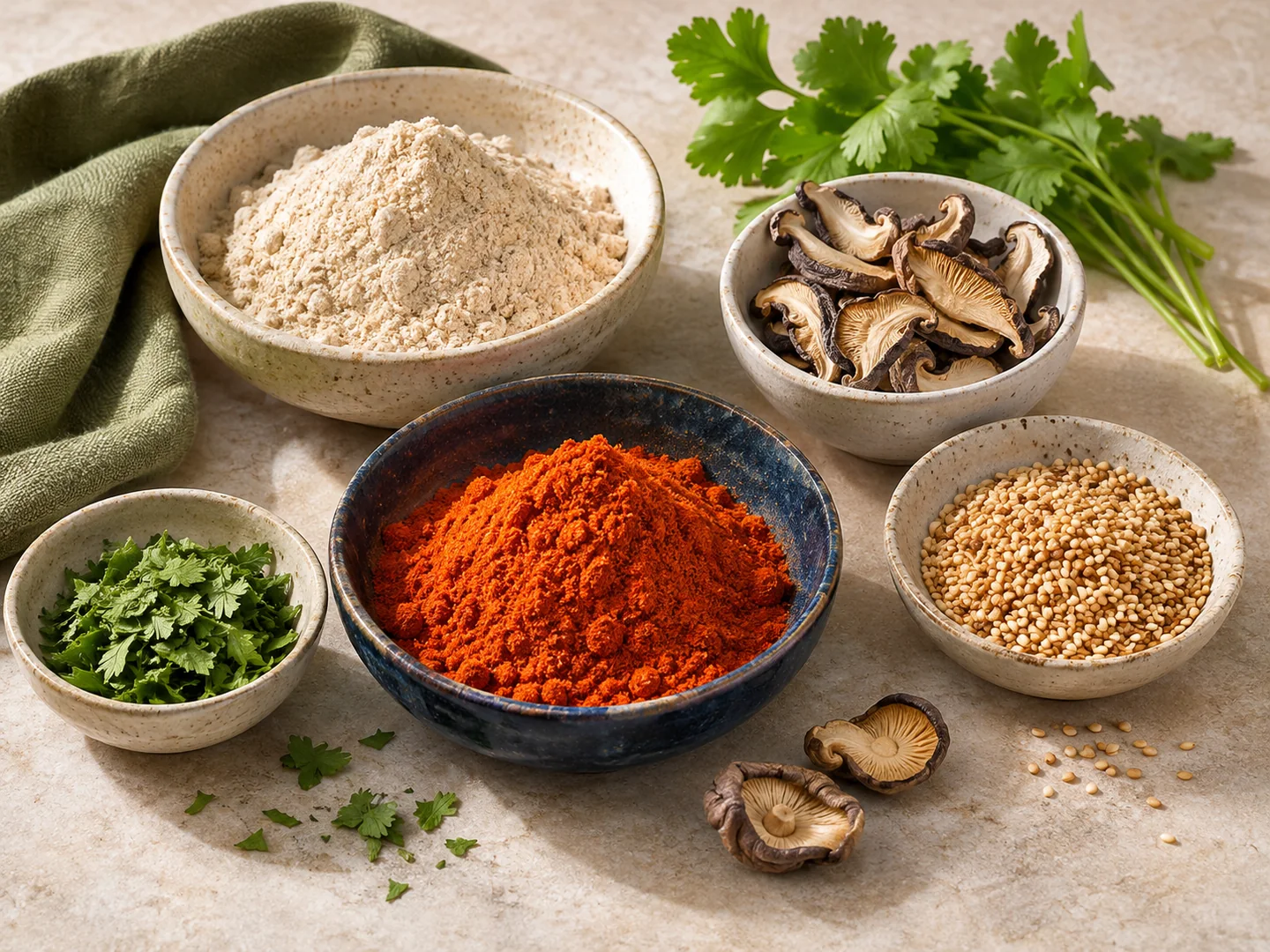
Food ingredients
Assess food ingredients in the intended formulation and processing conditions.
Role in the formulation
Identify whether the ingredient builds base taste, shapes texture or changes the eating experience. A sauce can be assessed on the intended dish, while a snack can be sampled across several pieces to check how evenly the flavour is distributed.
What to check
Keep a reference sample and change one deliberate variable at a time.
- Describe the product format and process, such as baking, blending or coating.
- Check colour, adhesion, smoothness or crispness against product-specific criteria.
- Taste the finished product as it will be eaten and record the finish.
Making an ingredient enquiry
Share the product base, sensory target, current ingredient and trial observations. Note any specification or documentation requirements so the scope can be defined early.
Choose criteria to suit the product
Different foods call for different checks. For a sauce served with a meal, assess coverage and balance on the actual dish. For baked products, record whether the texture is soft or crisp at the intended eating time. Selecting one attribute to improve first makes changes easier to compare between trials.
Record enough detail to repeat the trial
Keep a reference from the current formulation and give each variant a code. Record the ingredient changed, relevant processing step and observations on the finished product. If a freshly prepared sample differs from a retained sample, record the evaluation time. This helps the team reproduce the trial or explain why it selected a particular option.
Applications for cheese and salted egg powders
For coated foods such as fries, popcorn or fried chicken, assess both the flavour and how well the powder adheres. For baking and sauces, use the intended formulation and compare samples after the main processing step. Check the product’s ingredient and allergen information before including it in a formulation.