
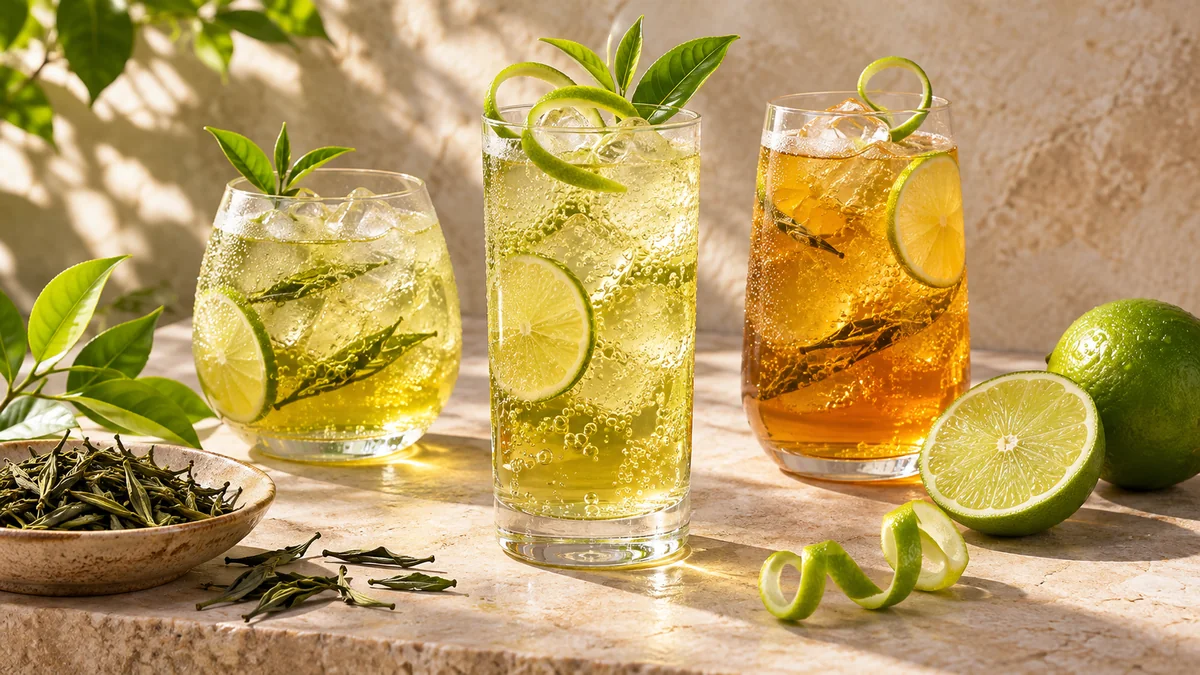
Beverage ingredients
Trial beverage ingredients in tea, fruit, dairy or plant-based products under their intended serving conditions.
Define the beverage profile
Describe the base, lead flavour, target sweetness and acidity. A fruit tea might need its tea character to carry beyond the first sip, while a plant-based drink might need to retain or soften a cereal or nut note.
Compare under matched conditions
Prepare a reference sample and evaluate variants at the same temperature, portion size and serving conditions.
- Aroma on opening or immediately after pouring.
- Flavour definition and mouthfeel mid-sip.
- Finish after several sips and changes under the selected storage conditions.
What to share
Indicate whether the product is chilled, served over ice or carbonated, and describe the intended packaging and process. Share a base sample if available so feedback can be tied to a direct comparison.
Give each round of trials a purpose
Use the first round to compare a few flavour directions on the same beverage base under the intended serving conditions. Once a direction is selected, use the next round to assess definition and finish. For a fruit tea, the team might choose a citrus direction first and then work on keeping the tea character recognisable in later sips.
Record when and how samples were evaluated
Code each sample and record the serving temperature, when it was poured and the time between preparation and tasting. If the drink is served over ice or after opening a pack, include that step in a separate evaluation. The results can show what needs another look before testing with the actual packaging or process.
From made-to-order drinks to packaged beverages
For drinks made to order, describe the serving recipe and how ice is used, if applicable. For packaged products, add the intended process and packaging. These details help identify the samples to review, such as a freshly prepared drink or one evaluated after agreed storage conditions.