
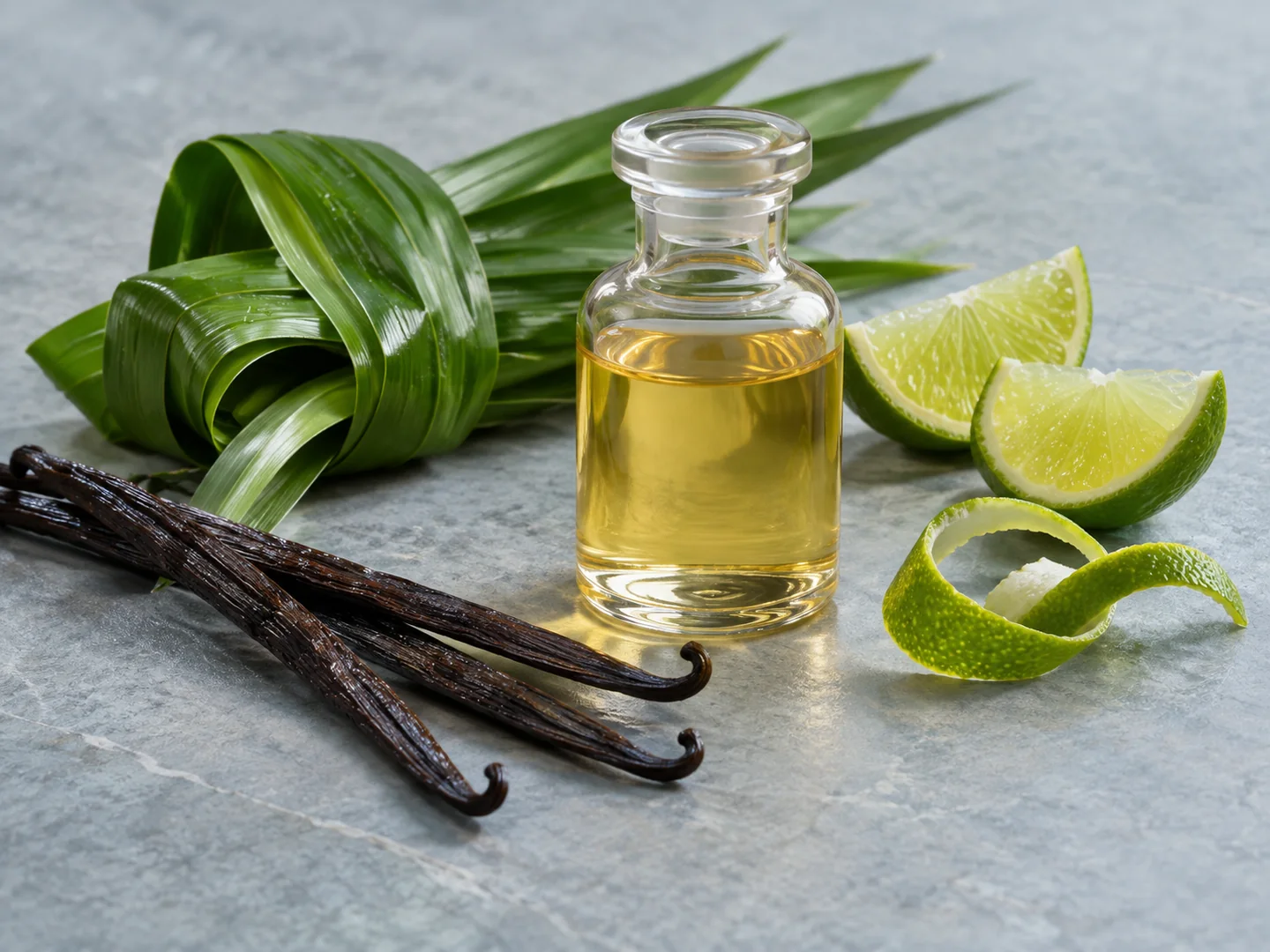
Flavours
Select a flavour profile for the product base, process and intended sensory experience.
Describe the target note
A flavour name can describe several experiences. For citrus, distinguish fresh peel, bright juice or ripe fruit. For vanilla, say whether it should lead the first taste or linger softly at the finish.
Trial in the intended base
Keep the base and sampling conditions consistent across flavour options.
- Record the main aroma on opening and during consumption.
- Check how clearly it comes through after the intended process.
- Compare the finish and identify notes that obscure what you want to retain.
Requesting samples
Share the product name, formulation base, process, reference sample and the note to highlight. When one concept is intended for several bases, set a separate sensory target for each.
Use a reference to agree on the language
When you share a sample, identify its most recognisable note and what you want to change. Instead of asking for “more natural vanilla”, describe a warm aroma on opening and a lighter finish after eating. If the base already has a distinct cocoa or dairy character, specify that it should remain apparent.
Compare samples around the key processing step
Assess the reference and trial at the same point in the process. For a baked or blended product, record trial conditions and evaluate the sample after that step as well. If the same flavour concept is intended for a drink and a bakery product, set criteria for each base and approve each application on its own results.
Technical information to review
Once a flavour direction is selected, share the base, application and intended process to discuss suitable options. If there are requirements for ingredients, allergens, labelling or documentation, include them in the brief so they can be checked against the specific sample code.