
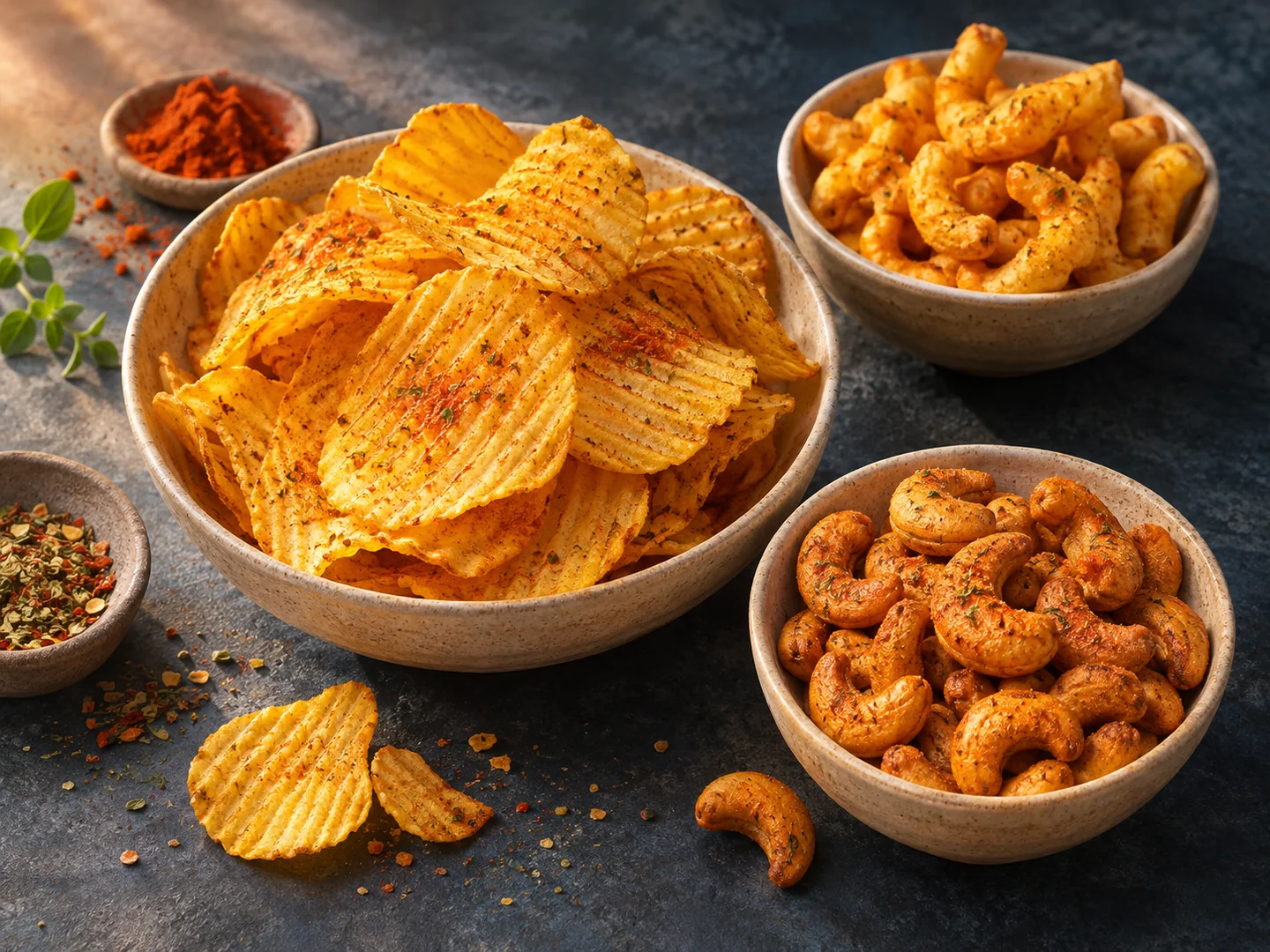
Seasoning production
Develop seasoning around the product base, coating method and signature flavour.
Product base and application
Potato crisps, popcorn and roasted nuts have different surfaces and base aromas. Trial seasoning on the actual product and record how it is applied so flavour changes can be distinguished from coating differences.
Flavour through the bite
Assess pieces from several places in the pack.
- Aroma and taste on opening or on the first bite.
- Body during chewing and heat, saltiness or acidity at the finish.
- Consistency between pieces and loose seasoning at the bottom of the pack.
Preparing the brief
Share the base sample, target profile, intended coating method and the current version if available. Where several bases need to carry the same signature flavour, specify the defining note for each product.
Assess flavour and coating in separate comparisons
To compare two blends, use the same base, coating amount and mixing method. Once a flavour direction is chosen, retain that blend while comparing ways to apply it. Sample from several places in the batch. If the first piece tastes stronger than later pieces, record the variation together with loose seasoning and review the mixing conditions.
Prepare the handover to a pilot batch
Retain the approved sample and record the blend revision, base characteristics, mixing sequence and intended pack format. When equipment or batch size changes, repeat the original checks for the defining aroma, the finish and consistency between pieces. These records tell the development team which results need to carry through when the trial is scaled up.
Seasoning for the intended application
A seasoning brief can focus on a surface coating or on the requirements of a marinade. For snacks, cashews or dried potato products, describe the base, the point at which the seasoning is applied and the target result. Say whether samples need to be assessed after packing or compared across several parts of a batch.